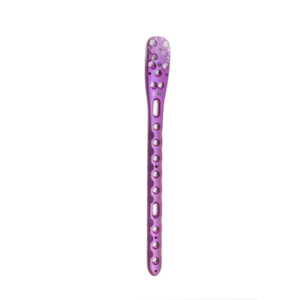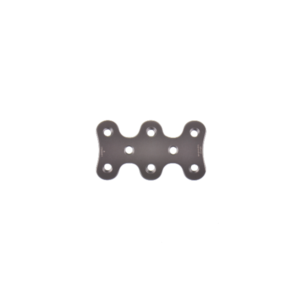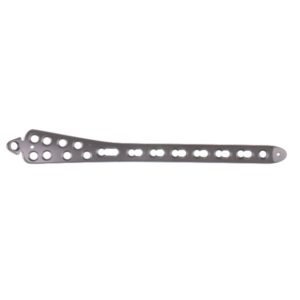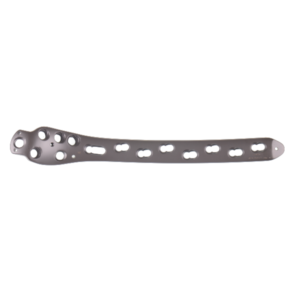
Femoral Neck System FNS

Category
Dynamic Stability for Neck of Femur Fractures


An integrated implant solution for unstable femoral neck fractures, combining an anti-rotational bladedynamic compression screw, and locking plate in one streamlined system. Delivers active impaction, controlled collapse, and multiplanar rigidity through subchondral support.


Key Highlights:
✓ Anti-Rotation Blade: 5.8mm titanium implant secures superior head fragment (90%↑ torsional stiffness)
✓ Dynamic Sliding Core: Adjustable 25–55mm lag screw enables controlled fracture settlement (≤3.5mm)
✓ Anatomic Locking Plate: Precontoured to lateral femur; 3–5 locking holes → ↑ distal fixation
✓ Minimized Invasiveness: Single-incision insertion with integrated instrumentation
✓ Material Integrity: Ti-6Al-4V alloy (ASTM F136) for fatigue resistance >500,000 cycles


Target Indications:
  • Pauwels III vertical femoral neck fractures
  • Basicervical & comminuted transcervical fractures
  • Nonunion/implant revision cases
  • Intertrochanteric fracture extensions


Reinvent femoral neck fixation – three essential functions, one predictable outcome.

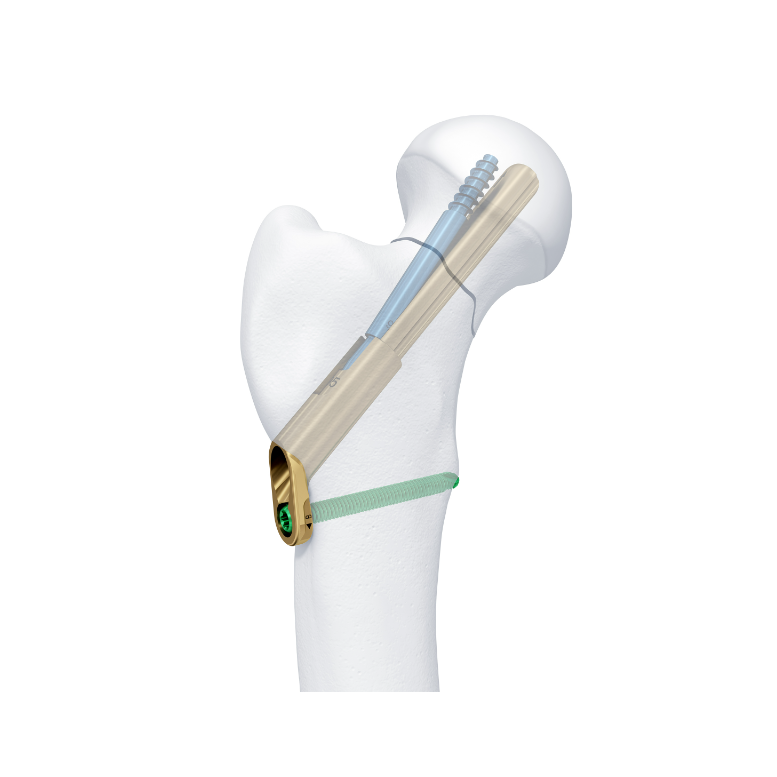
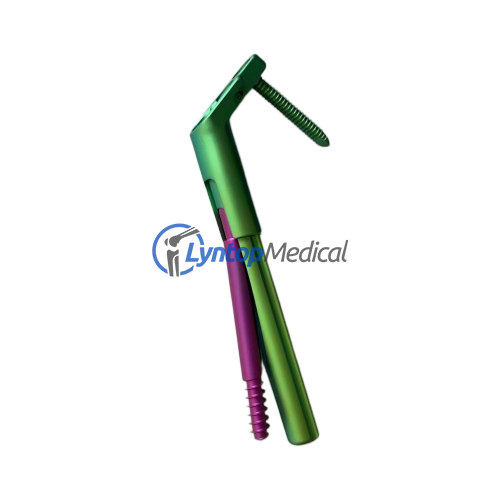
Femoral Neck System Components

  • Bolt: Provides angular stability by fixing securely to the plate.
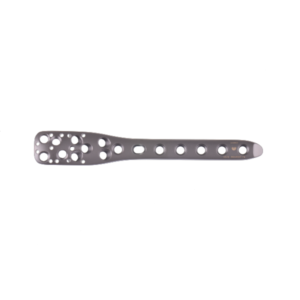
  • Plate (with Locking Screw): Offers angular stability and a platform for secure fixation.
  • Antirotation Screw (ARScrew): Provides rotational stability and prevents the femoral head from rotating.
  • Optional Protection Sleeve: Facilitates the insertion of the ARScrew.
  • Special Instrument Set for FNS
No.DescriptionSpecificationMaterial
1FNS Locking plate1 holeTitanium Alloy
2FNS Locking plate2 holesTitanium Alloy
3Antirotation Screw6.5x80mmTitanium Alloy
4Antirotation Screw6.5x85mmTitanium Alloy
5Antirotation Screw6.5x90mmTitanium Alloy
6Antirotation Screw6.5x95mmTitanium Alloy
7Antirotation Screw6.5x100mmTitanium Alloy
8Antirotation Screw6.5x105mmTitanium Alloy
9Antirotation Screw6.5x110mmTitanium Alloy
10Antirotation Screw6.5x115mmTitanium Alloy
11Bolt10x80mmTitanium Alloy
12Bolt10x85mmTitanium Alloy
13Bolt10x90mmTitanium Alloy
14Bolt10x95mmTitanium Alloy
15Bolt10x100mmTitanium Alloy
16Bolt10x105mmTitanium Alloy
17Bolt10x110mmTitanium Alloy
18Bolt10x115mmTitanium Alloy
19Locking screw5.0x26mmTitanium Alloy
20Locking screw5.0x28mmTitanium Alloy
21Locking screw5.0x30mmTitanium Alloy
22Locking screw5.0x32mmTitanium Alloy
23Locking screw5.0x34mmTitanium Alloy
24Locking screw5.0x36mmTitanium Alloy
25Locking screw5.0x38mmTitanium Alloy
26Locking screw5.0x40mmTitanium Alloy
27Locking screw5.0x42mmTitanium Alloy
28Locking screw5.0x44mmTitanium Alloy
29Locking screw5.0x46mmTitanium Alloy
30Locking screw5.0x48mmTitanium Alloy
31Locking screw5.0x50mmTitanium Alloy
32Locking screw5.0x52mmTitanium Alloy
33Locking screw5.0x54mmTitanium Alloy
34Locking screw5.0x56mmTitanium Alloy
35Locking screw5.0x58mmTitanium Alloy
36Locking screw5.0x60mmTitanium Alloy

The Femoral Neck System: A Solution for Fractured Hips

The Femoral Neck System (FNS) is a medical device designed to provide enhanced fixation for femoral neck fractures in adults and adolescents with fused growth plates.

Advancing Femoral Neck Fracture Care

The Femoral Neck System (FNS) represents a significant evolution in the internal fixation of femoral neck fractures. Designed to address the biomechanical challenges and clinical shortcomings of traditional methods (like cannulated screws or dynamic hip screws), the FNS offers a streamlined, integrated solution centered on:
  • Optimized Biomechanics: Combines a sliding lag screw mechanism for controlled compression with a dedicated anti-rotational implant (typically an integrated derotation screw or blade) within a single, low-profile implant.
  • Intramedullary Stabilization: A distal locking mechanism engaging the femoral shaft enhances stability, particularly valuable in unstable fracture patterns or osteoporotic bone.
  • Minimized Soft Tissue Disruption: Utilizes a minimally invasive approach with guidewire precision and a single insertion point.
  • Adaptability: Designed to accommodate a spectrum of femoral neck fracture types, from non-displaced Garden I/II to more complex displaced patterns (Garden III/IV), and suitable for younger patients with high functional demands as well as elderly patients seeking stable fixation for early mobilization.
  • Efficiency: Standardized instrumentation promotes procedural predictability and efficiency.
The FNS aims to improve outcomes by providing superior rotational control, reliable interfragmentary compression, and enhanced overall stability compared to historical options.

Indications

The Femoral Neck System (FNS) is indicated for the internal fixation of femoral neck fractures in skeletally mature patients:
  1. Fresh Fractures:
    • Non-displaced (Garden I & II) femoral neck fractures.
    • Displaced (Garden III & IV) femoral neck fractures requiring anatomical reduction and stable internal fixation.
    • Basicervical femoral neck fractures.
  2. Revision Surgery: Stabilization of failed previous fixation of femoral neck fractures (e.g., screw cut-out).
  3. Non-unions & Malunions: Selected cases requiring revision fixation and compression.
  4. Pathological Fractures: Stabilization of impending or actual pathological fractures within the femoral neck region, when definitive management is appropriate.
  5. Osteopenic/Osteoporotic Bone: Specifically designed features (distal locking, anti-rotation) enhance stability in compromised bone quality.

Contraindications

Use of the FNS requires careful patient selection and assessment of risks:
  1. Active Local or Systemic Infection: Risk of implant-associated infection.
  2. Skeletal Immaturity: The system is not intended for patients with open growth plates.
  3. Severe Vascular or Neurological Insufficiency in the Limb: Contraindicates elective surgery in the area.
  4. Severe Bone Loss or Inadequate Bone Stock: Where secure fixation cannot be achieved proximally (femoral head/neck) or distally (femoral shaft).
  5. Allergy to Implant Materials: Hypersensitivity to titanium alloy or other components.
  6. Non-compliant Patient: Patients unable or unwilling to follow post-operative weight-bearing restrictions and rehabilitation protocols.
  7. Lack of Surgical Expertise: Requires specific training in minimally invasive techniques, fracture reduction, and the FNS instrumentation.


The final decision to use the FNS must be based on the surgeon’s evaluation of the specific fracture pattern, patient factors, and suitability compared to other treatment options.

Surgical Technique

The FNS utilizes a minimally invasive technique facilitated by specialized instrumentation:

1.Preoperative Planning

    • Detailed review of AP/Lateral hip radiographs and potential CT scans.
    • Template implant sizing based on anatomy and fracture geometry.
    • Identify optimal entry point and trajectory.

2.Patient Positioning

Supine position on a fracture table or radiolucent operating table; traction applied for reduction. Ensure unimpeded fluoroscopic access (AP, Lateral, and true lateral views essential).

3.Fracture Reduction

Obtain anatomical reduction under fluoroscopic guidance (critical for successful fixation). Closed reduction attempted first; open reduction via small anterior approach if necessary.

4.Guidewire Insertion & Entry Point

  • Key Landmark: Entry point typically slightly lateral to the piriformis fossa or in the greater trochanter tip region (system dependent).
  • Insert K-wire under fluoroscopy confirming optimal position centrally within the femoral neck and head on both AP and true lateral views.

FNS Assembly & Insertion

  • Measure depth using graduated sleeves over the guidewire.
  • Prepare the proximal femur (drill/ream specific channels as per system design).
  • Assemble the FNS implant (lag screw, anti-rotation component, plate/barrel section) onto the inserter.
  • Insert the assembled FNS device over the primary guidewire to the pre-measured depth.
  • Confirm optimal implant position fluoroscopically (tip-apex distance critical for lag screw).

Distal Fixation & Locking

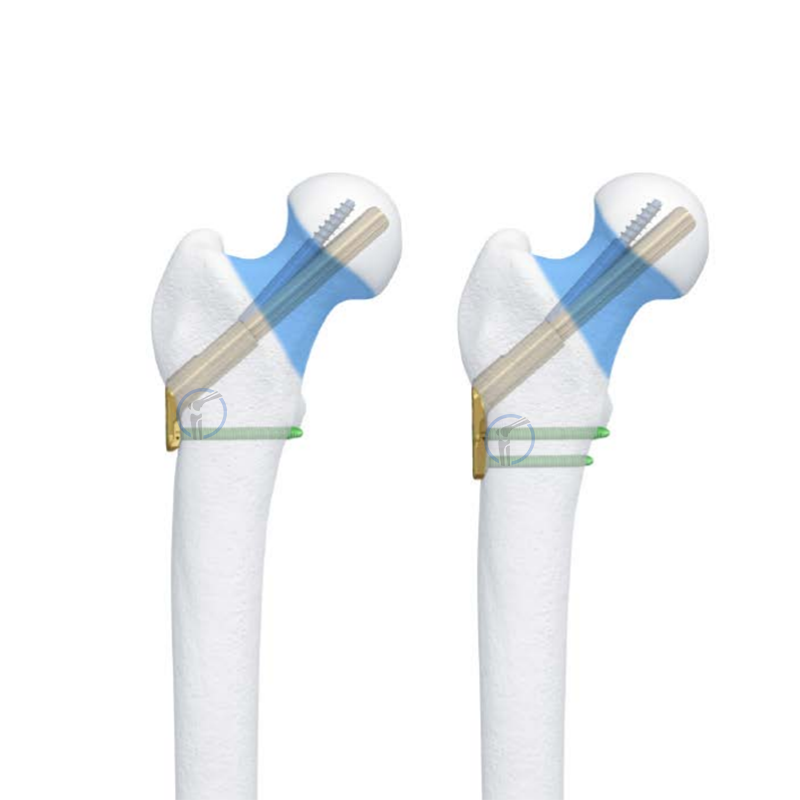
  • Affix the distal plate/barrel segment to the lateral femoral cortex.
  • Insert distal locking screws (usually one or two) through a targeting guide.

Compression & Final Locking

  • Apply controlled compression across the fracture site via the inserter.
  • Final tightening of the lag screw locking mechanism within the barrel to prevent screw disengagement.
  • Final tightening of the anti-rotation implant locking mechanism.

Final Check & Closure

  • Confirm fracture reduction, implant position, and stability under full dynamic fluoroscopy.
  • Remove guidewires and inserter.
  • Close incisions in layers.

Post-operative Management

  • Immediate protected weight-bearing status defined by fracture stability and surgeon protocol.
  • Standard wound care.
  • Rehabilitation focused on regaining hip range of motion and strength.
  • Regular follow-up with radiographs to monitor union and implant position.


Important:* Surgeons must undergo specific procedural training on the particular FNS system being used and consult the manufacturer’s detailed Instructions for Use (IFU) for exact steps, warnings, and instrumentation details.*
Disclaimer: The information provided herein is a general overview for qualified healthcare professionals. It is not a substitute for the manufacturer’s official Instructions for Use (IFU), specific surgical training, or the surgeon’s independent clinical judgment. Product specifications, indications, contraindications, warnings, precautions, and detailed surgical techniques vary by specific FNS system and manufacturer. Always refer to the validated IFU and surgical technique guides for the exact product being used prior to any procedure. Off-label use carries inherent risks and must be carefully considered.
About Us
Welcome to Lyntop Medical, we are a premium orthopedic implants & instruments supplier from China.
Our mission is to make high-quality orthopedic medical devices accessible and affordable across the globe.
Together, we empower your surgeons to Alleviate Pain and Restore Mobility for patients.

Contact Us Immediately

Our dedicated team is at your service 24/7.