
The successful management of complex orthopedic injuries and conditions demands a versatile toolbox. Among the most critical instruments, especially in challenging scenarios, are External Fixation Systems. These devices, applied externally to stabilize bone fragments via transcutaneous pins or wires connected to an external frame, play a vital role in modern trauma care, reconstruction, and deformity correction worldwide. For orthopedic importers seeking reliable partners and surgeons striving for optimal patient outcomes, understanding the evolution, capabilities, and appropriate application of modern EF systems is paramount.
Defining Orthopedic External Fixation
Orthopedic External Fixation is a surgical technique involving the percutaneous insertion of pins or wires into bone fragments proximal and distal to a fracture site, non-union, or osteotomy. These transfixion elements are then connected and stabilized using external rods, rings, or clamps, forming a rigid (or controlled motion) external frame. The fundamental principle is to achieve skeletal stabilization while bypassing the compromised soft tissue envelope. This method differs fundamentally from internal fixation (plates, screws, nails), where hardware is implanted directly onto or within the bone.
Core Advantages of External Fixation Systems
External Fixation Systems offers several distinct advantages that make it indispensable in specific clinical situations:
- Minimal Soft Tissue Disruption: Avoids further trauma to already compromised tissues, crucial in open fractures or severe soft tissue injuries.
- Adjustability: Frame configuration and biomechanics (compression, distraction, angulation) can be adjusted post-operatively, facilitating fracture reduction, managing limb length, or correcting deformities.
- Accessibility for Wound Care: The external frame allows unimpeded access to wounds, facilitating dressing changes, debridement, graft application, or flap monitoring.
- Stability in Complex Fractures: Provides excellent stability, even in highly comminuted fractures or segmental bone loss where internal fixation may be inadequate or impossible.
- Infection Control Potential: By avoiding implantation of large foreign bodies into potentially contaminated zones, EF reduces the risk of deep infection or allows management of established osteomyelitis. Infected non-unions often require EF as a key treatment component.
- Temporary Stabilization: Highly effective for initial damage control in polytrauma patients (“Damage Control Orthopedics – DCO”) before definitive fixation.
Exploring Common External Fixator Types & Configurations
Modern External Fixation Systems are highly modular. Key configurations include:
- Monoplanar Fixators: Utilize half-pins connected by rods/clamps in a single plane (e.g., anterior femur). Simple, stable for specific indications, less bulky.
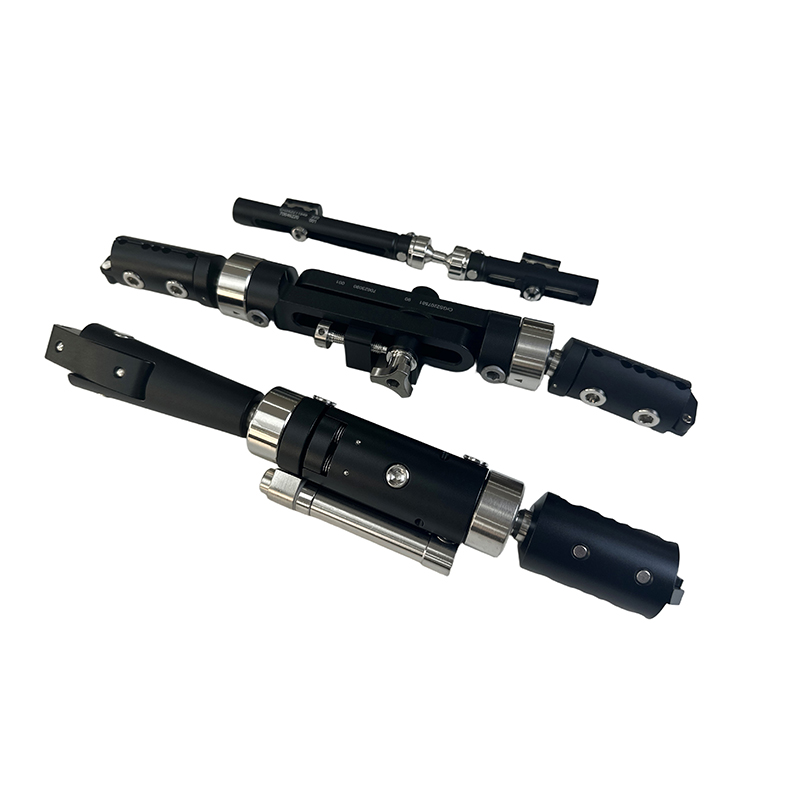
- Biplanar Fixators: Employ pins/rods in two planes (often perpendicular), significantly increasing stability. Common for metaphyseal fractures (e.g., distal radius, tibial plateau).

- Circular Fixators (Ilizarov/Taylor Spatial Frame): Utilize thin tensioned wires connected to rings. Offer unparalleled 3D stability and precise control in all planes (compression, distraction, translation, angulation). Essential for complex reconstructions, limb lengthening, deformity correction, and difficult non-unions. Hexapod systems (like Taylor Spatial Frame) offer computer-assisted deformity analysis and correction planning.
- Hybrid Fixators: Combine elements, such as a circular ring near a joint connected to unilateral bars via hybrid posts/clamps. Optimizes stability for periarticular fractures (e.g., proximal tibia).
External Fixation vs. Internal Fixation: A Strategic Comparison
Choosing between External Fixation and Internal Fixation depends on patient factors, injury pattern, and surgical goals:
| Feature | External Fixation | Internal Fixation |
|---|---|---|
| Invasiveness | Minimally Invasive (percutaneous pins/wires) | More Invasive (surgical dissection, implant placement) |
| Mechanism | External Frame | Internal Implants (plates, nails, screws) |
| Infection Risk | Lower in contaminated/open wounds | Higher risk in contaminated settings |
| Soft Tissue Access | Unobstructed Access for wound management | Obstructed Access |
| Stability Type | Adjustable stability post-op | Fixed stability at time of surgery |
| Healing Env. | Indirect, Callus Formation (secondary healing) | Direct Bone Healing (primary healing, requires anatomic reduction) |
| Complexity | Technically Complex application and management | Established Techniques |
| Patient Tolerance | Pin Site Care Required, Bulkier Frame, Social Stigma | Integrated Implants, Less Visible |
| Typical Indications | Severe Open Fractures, Polytrauma, Infected Non-Unions, Deformity Correction, Limb Lengthening | Closed Fractures, Simple Dislocations, Pathologic Fractures in healthy bone |
Key Clinical Indications for External Fixation
External Fixation is the treatment of choice or a crucial option in numerous scenarios:
- Severe Open Fractures (Gustilo IIIA, B, C): The gold standard for initial stabilization, allowing soft tissue management and reconstruction.
- Polytrauma (Damage Control Orthopedics): Rapid skeletal stabilization to reduce physiological burden.
- Limb Lengthening: Controlled distraction osteogenesis (Ilizarov principle).
- Deformity Correction: Multiplanar corrections (angular, rotational, translational) using circular/hexapod systems.
- Non-Unions & Infected Non-Unions: Provides stability while allowing treatment of infection and bone grafting.
- Arthrodesis: Particularly useful in complex joint fusions, especially with infection risk or poor bone stock.
- Complex Periarticular Fractures: Where internal fixation is insufficient or risky (e.g., tibial plateau, pilon, distal radius – often hybrid External Fixation System).
- Temporary Stabilization: Bridge to definitive IF once soft tissues improve or patient stabilizes.
- Compromised Soft Tissues: Burns, extensive degloving, vascular insufficiency.
- Battlefield & Emergency Medicine: Rapid application in resource-limited or austere environments.
Specialized Applications: Beyond Acute Trauma
External Fixation’s versatility extends far beyond emergency trauma care:
- Pediatric Orthopedics: Limb lengthening, deformity correction (Blount’s disease, congenital pseudarthrosis of tibia), fracture management in growing bone.
- Infection Management: Stabilization during septic non-union treatment or chronic osteomyelitis management.
- Distraction Osteogenesis: Not just lengthening, but also transport for segmental defects.
- Complex Reconstructions: Salvage procedures following tumor resection or failed total joint arthroplasty.
Modern External Fixator Features Enhancing Performance
Advancements continuously refine External Fixator efficacy and patient comfort:
- Lightweight Materials: Carbon Fiber Reinforced Polymer (CFRP) bars offer exceptional strength-to-weight ratio and radiolucency. Titanium pins/clamps provide strength, biocompatibility, and corrosion resistance.
- Low-Profile & Low-Irritation Clamps: Reduce bulk and skin irritation, improving patient tolerance.
- Radiolucent Components: CFRP bars and specialized clamps allow superior radiographic visualization without artifact.
- Quick-Connect Systems: Simplify intraoperative assembly and adjustments.
- Dynamization Capabilities: Features allowing controlled axial micromotion to stimulate fracture healing.
- Advanced Rings & Hinges: Engineered for strength and precise multi-planar movement in circular systems.
- Compatibility with Imaging: Full compatibility with CT/MRI for detailed planning and assessment without removing the frame.
Critical Considerations in Frame Application & Management
Successful EF outcomes depend on meticulous technique and care:
- Pin/Wire Insertion Technique: Strict adherence to Safe Corridors, low-speed drilling to avoid thermal necrosis, bicortical purchase where possible.
- Frame Stability Concepts: Understanding biomechanical principles (pin number/diameter/spacing, frame configuration) to achieve optimal stability.
- Neurovascular Anatomy Awareness: Critical to avoid iatrogenic injury during pin placement.
- Pin Site Care: Cornerstone of External Fixation management. Protocols vary (simple cleansing vs. specialized solutions/dressings), emphasizing consistent gentle care to prevent infection/loosening.
- Postoperative Care: Regular follow-up for wound monitoring, assessment of neurovascular status, checking frame stability, and making necessary adjustments. Weight-bearing protocols.
- Patient Education: Empowering patients to manage pin site care and recognize signs of complications (infection, loosening) is essential.
External Fixator Removal: Timing and Process
Removal timing is individualized and based on:
- Healing Progression: Assessed via clinical (lack of pain/movement at fracture site) and radiological (callus bridging on multiple views, CT scan confirmation in complex cases) parameters. Premature removal risks refracture.
- Factors Influencing Duration: Fracture type/severity/complexity, bone quality (osteoporosis), patient factors (smoking, comorbidities), soft tissue healing status, presence/absence of complications (infection, delayed/non-union).
- Dynamization: Gradual reduction in frame rigidity (“dynamization”) may precede removal to stimulate final healing.
- The Removal Process: Typically performed in clinic or minor theatre. Pins/wires are removed after loosening clamps/connections. Sites are cleaned and dressed. Some pin tracts may require curettage if infected.
- Potential Next Steps: Sometimes EF serves as a temporary scaffold. Removal may coincide with or precede definitive conversion to internal fixation or functional bracing.
Selecting the Optimal External Fixation System: Key Factors
Choosing the right system requires strategic consideration:
- Pathology/Fracture Characteristics: Match frame type to the specific demands (e.g., circular/hexapod for multi-planar deformity, unilateral for simple shaft fractures, hybrid for periarticular).
- Patient Factors: Body habitus (skin-to-bone distance), activity level, compliance with care, co-morbidities, social support.
- Surgeon Experience & Familiarity: Proficiency with specific frame types and techniques is critical for successful application and management. Complex systems require training.
- Healthcare Setting & Resources: Availability of specialized instrumentation, operating time constraints, post-op management capabilities (clinic visits, physiotherapy), cost.
Current Trends & Future Directions in External Fixation
External Fixation technology continues to evolve:
- Minimally Invasive Techniques: Refined pin placement methods to reduce morbidity.
- Computer-Assisted Planning & Navigation: Increasing use of pre-operative 3D planning software integrated with intraoperative navigation for hexapod systems (Taylor Spatial Frame) for unparalleled accuracy in deformity correction and fracture reduction.
- Improved Pin-Site Care Protocols: Ongoing research into optimal techniques and materials to reduce infection and loosening.
- Material Science Innovations: Development of coatings to reduce pin loosening/infection, bioabsorbable components.
- Telemedicine Integration: Remote monitoring of frame adjustments and pin site status, enhancing follow-up care, especially in remote areas.
- Global Health & Disaster Response: External Fixation’s portability and effectiveness in austere environments make it crucial in disaster zones and resource-limited settings. New designs specifically for these contexts are emerging.
Conclusion
External fixation remains a cornerstone technique in the armamentarium of the orthopedic surgeon, offering unique solutions for complex fractures, limb reconstruction, and deformity correction that internal fixation alone cannot address. For medical device importers, understanding the clinical drivers, technical specifications, material advancements, and evolving market trends surrounding modern External Fixation Systems is key to identifying and supplying high-quality solutions that meet the needs of surgeons globally. For surgeons, mastery of External Fixation principles, frame selection, application techniques, and meticulous postoperative management ensures that patients benefit from this powerful technology, achieving optimal functional outcomes even in the most challenging cases. As innovation continues in materials, design, and digital integration, external fixation will undoubtedly maintain its vital role in pushing the boundaries of orthopedic care.